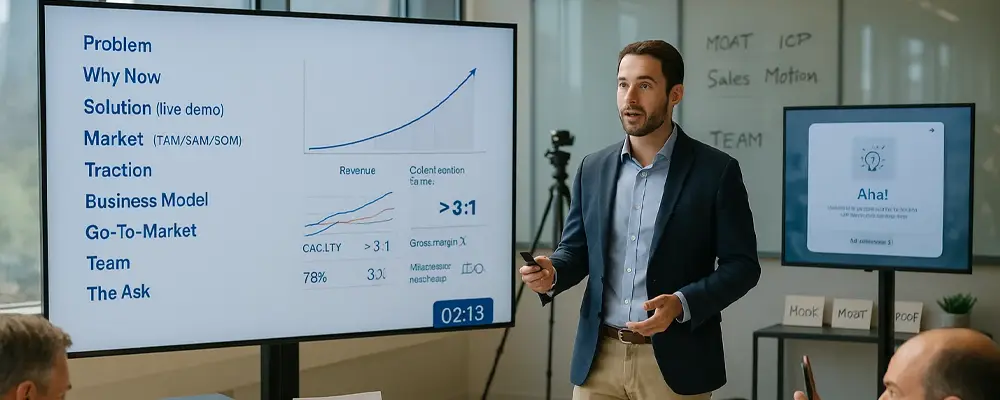
The Ultimate Guide to a Winning Startup Pitch: How to Pitch a Startup and Secure Funding
Crafting a winning startup pitch is the single most critical skill for any founder. Imagine standing in front of investors, your heart racing, knowing this moment could make or break your dream. Why does it matter so much? Well, a sharp pitch isn’t just talk—it’s your ticket to grabbing that all-important funding, shining in pitch competitions, and locking in partnerships that propel your business forward.
Think about it: investors hear dozens of ideas a week. What sets yours apart? Mastering how to pitch a startup means turning your vision into something irresistible. It’s not magic; it’s strategy. And here’s the good news—this guide breaks it all down.
In this post, you’ll get a full roadmap. We’ll cover proven frameworks, those sneaky startup pitch secrets from successful founders, and hands-on tips to wow anyone listening. Whether you’re chasing venture capital or just building buzz, these steps have helped top startups land millions. Stick around, and by the end, you’ll know exactly how to pitch a startup and win big.
Estimated reading time: 12 minutes
Key Takeaways
- Know your audience: A winning pitch is always tailored, whether you’re speaking to VCs, angel investors, or competition judges.
- Story is king: Structure your pitch as a compelling narrative with a clear problem, a heroic solution (your startup), and a powerful resolution.
- Follow a proven structure: Cover the essential 10 elements: Problem, Solution, Market, Business Model, Competition, Traction, Team, Financials, and The Ask.
- Design for clarity: Use a clean, visual pitch deck with one main idea per slide to keep your audience engaged and focused.
- Practice makes perfect: Your delivery, from your vocal tone to body language, is just as important as your content. Rehearse until it’s flawless.
Table of Contents
- Know Your Audience, Know Your Goal
- Your Step-by-Step Investor Pitch Guide to Tell the Right Story
- Designing the Visuals: How to Build a Pitch Deck That Wins
- It’s Not Just What You Say, It’s How You Say It: Crafting a Compelling Pitch
- From Deck to Stage: Nailing Your Startup Pitch Presentation
- What VCs Won’t Tell You: Startup Pitch Secrets for Convincing Investors
- Beyond the Boardroom: How to Win a Pitch Competition
- From Pitch to Term Sheet: Closing the Deal
- The Final Countdown: Your Checklist to Deliver a Winning Pitch
- Frequently Asked Questions (FAQ)
Know Your Audience, Know Your Goal
Ever tried selling ice to someone in the Arctic? That’s what a generic pitch feels like. A winning startup pitch starts with customization. No blanket approach works here. You have to tweak your message to fit who you’re talking to, making it feel like you’re speaking directly to their interests.
Let’s break down the main types of audiences. Each one hunts for different things in your story.
- Venture Capitalists (VCs): These folks dream big. They’re after startups that can scale huge and deliver 10x or even 100x returns. Show them a massive market, your edge over rivals, and a clear road to a blockbuster exit. It’s all about the numbers and the potential explosion.
- Angel Investors: Often betting their own cash, angels get hooked by your fire and know-how. Sure, they want a solid business case and decent returns, but your team’s passion and a gripping tale can seal the deal. Highlight why you’re the ones to trust.
- Competition Judges: In a contest, clarity rules. They score on how well you nail the problem-solution match, your polish, and fit with their rules—like innovation level, real-world impact, or how doable your idea is. Make every word count.
- Potential Partners: Here, it’s about teamwork. Explain how your startup boosts their goals. Focus on shared wins, like cost savings or new markets, and outline a simple collaboration plan.
Tailoring like this is key to convincing investors and others. It turns a good pitch into a winner. Wondering why some founders flop? They skip this step and blast the same script everywhere.
Next, nail down your goal. What do you want from this pitch? That shapes everything.
- Fundraising: Build up to your “ask.” Make financial forecasts the star, showing how cash turns into growth.
- Market Validation: Prove demand. Spotlight user growth, feedback, or early sales as your rock-solid evidence.
- Strategic Partnerships: Dive into your rollout plan and how your fix meshes with theirs. Synergy is the word.
- Brand Visibility: Craft a shareable story. Make the problem and your hero-role unforgettable, easy to pass along.
Get this foundation right, and your winning startup pitch feels natural, not forced. It’s like chatting with a colleague over coffee—direct, engaging, and spot-on.
Your Step-by-Step Investor Pitch Guide to Tell the Right Story
Ready to pitch to win funding? Great pitches follow a clear structure. It’s like building a house—you need strong bones before the fancy stuff. This investor pitch guide lays out the essentials, drawing from what top founders use to snag deals. We’ll go element by element, so you can craft a narrative that flows and persuades.
Start with the problem. This sets the stage. Paint it vividly—use a quick story or a jaw-dropping stat to show why it’s a big deal. For example, “Did you know 80% of small businesses struggle with inventory tracking, costing them millions?” Make it real, urgent, and tied to real pain.
Now, roll out your solution. This is your startup’s shining moment. Describe what you offer, how it fixes the issue, and that unique twist—your “secret sauce.” Keep it simple: “Our app uses AI to predict stock needs, slashing waste by 40%.” Show why it’s better, faster, or cheaper than what’s out there.
Move to market opportunity. Investors love scale. Break it down with TAM (total addressable market—the whole pie), SAM (serviceable addressable market—what you can realistically reach), and SOM (serviceable obtainable market—your near-term slice). Add why now: maybe tech advances or trends make your timing perfect. “The e-commerce boom has pushed TAM to $500 billion, and we’re grabbing 5% with our edge.”
Explain your business model next. How do you turn ideas into cash? Spell it out—SaaS fees, per-transaction cuts, ads, whatever. Then, prove it’s working with traction. Share metrics like month-over-month user jumps, recurring revenue, glowing reviews, or deals inked. “Our MRR hit $50K last quarter, with 20% growth monthly.”
Spotlight the team. Investors bet on people. Don’t just name-drop; tout wins like past startups sold or roles at tech giants. “Our CEO built and exited two apps; our CTO coded for Google.” Explain why this crew is unbeatable in your space.
Wrap with financials and the ask. Project 3-5 years ahead: revenue ramps, costs, when you break even. Be realistic, backed by data. Then, state your need: “$2M for 40% product tweaks, 40% marketing, 20% ops—to hit 100K users in year one.”
Pro tip: Keep slides laser-focused. Explain simply, let metrics do the talking. This structure isn’t rigid—adapt it, but cover these to pitch to win funding. It’s like a roadmap; follow it, and you avoid dead ends.
Designing the Visuals: How to Build a Pitch Deck That Wins
Your pitch deck is the visual heartbeat of any startup pitch presentation. It’s not just slides—it’s your story in pictures. A pitch deck that wins keeps eyes glued and minds convinced. Let’s dissect a solid 10-slide model, inspired by decks that scored big funding.
- Title. Keep it punchy—your company name, logo, a catchy tagline like “Revolutionizing inventory for small biz,” and your contact info. Set the tone right away.
- Problem/Opportunity. Dive into the pain. Use bullets or an image to show the issue clearly, like stats on lost revenue from bad stock management.
- Solution. Showcase your fix. Highlight benefits with a demo screenshot or simple diagram. Explain your value prop: what it does and why it’s game-changing.
- Market Size. Numbers here. Chart TAM, SAM, SOM visually—pies or bars work best. Add growth trends to show the rising tide.
- Business Model. Map your money flow. A flowchart: users in, revenue out. Include pricing tiers or key partners.
- Competition. Position yourself. A matrix comparing features—yours shining in green. Stress your moat, like patented tech.
- Traction/Milestones. Proof points. Graphs of user growth, revenue lines, or logos of early clients. Timeline of hits so far.
- Team. Headshots and bios. Bullet key achievements: “Led team at Amazon, scaled to $10M ARR.”
- Financials. High-level charts—revenue forecasts, burn rate. Avoid dense spreadsheets; keep it digestible.
- The Ask. Bold and clear: funding amount, use breakdown, milestones. End with a call to action.
This setup is battle-tested for a pitch deck that wins.
For visuals, prioritize clarity. Clean designs, big fonts (at least 24pt), high-contrast colors—no clutter. One big idea per slide keeps focus.
Visualize data smartly. Simple bar graphs beat tables. A rising line for growth says more than words.
Stay consistent. Same colors, fonts, logo on every slide. It builds brand trust subtly.
Ditch jargon. If grandma gets it, you’re golden. These tips make your startup pitch presentation pop without overwhelming.
It’s Not Just What You Say, It’s How You Say It: Crafting a Compelling Pitch
Facts are fine, but stories stick. In a compelling pitch, weave a tale that pulls heartstrings and logics alike. Investors recall narratives, not bullet points. It’s like sharing a thriller over lunch—hook them, build drama, deliver the payoff.
Structure your story arc wisely. Kick off with a hook: a question like “What if losing customers cost you half your revenue?” or a stat that shocks. Grab curiosity fast.
Then, the conflict. Paint the problem as the bad guy. Amp up the stakes—why it’s unbearable, who it hurts, how the world suffers without a fix. Build that tension.
Finally, resolution. Your startup swoops in as hero. Show how you save the day, creating a brighter tomorrow. Tie it back to real wins.
Boost with techniques. Add emotional resonance: link the problem to human stories, like a shop owner going bust. Make them feel it.
Nail a clear value proposition. Boil it to one line: “We cut inventory errors by 50%, boosting profits instantly.”
End with memorable takeaways. One or two zingers they repeat later, like “The future of retail, simplified.”
This crafts a compelling pitch that’s persuasive and unforgettable. Witty aside: if your story bores you, imagine what it does to them!
From Deck to Stage: Nailing Your Startup Pitch Presentation
You’ve got the deck; now deliver it like a pro. A killer startup pitch presentation hinges on practice. Winging it? That’s a recipe for stumbles. Rehearse until it’s second nature—smooth, assured, engaging.
Record yourself. Watch for “ums,” rushed bits, or flat spots. Practice mirroring your energy or get feedback from mentors. It’s like prepping for a big game; drills win matches.
On stage, voice matters. Speak clearly, mix up speed and tone—slow for emphasis, quick for excitement. Pauses let points sink in.
Body language seals it. Open stance, gestures to illustrate (like hands expanding for growth), eye contact to connect. It’s not acting; it’s owning the room.
Q&A can clinch or kill. Listen fully, then answer briefly. Confident? Great. Stumped? “I’ll follow up with details today.” Turn it into a strength.
Master this, and you deliver a winning pitch that resonates. Curious how pros do it? They treat every pitch like the Super Bowl.
What VCs Won’t Tell You: Startup Pitch Secrets for Convincing Investors
Want the edge? Here’s startup pitch secrets from founders who’ve been there. They’re like hidden cheat codes for convincing investors.
- Leverage social proof. Flash logos of big clients, user quotes, or advisors with cred. It whispers, “Others trust us; you should too.”
- Metrics with punch. Frame them smartly: “CAC at $50, LTV at $500—10x ROI.” Not just numbers; show the win.
- Strategic punchlines. Craft tweetable gems: “We’re the Uber for pet care.” Memorable, shareable.
- Dodge pitfalls. Features? Tie to benefits: not “AI tracking,” but “saves 10 hours weekly.” Vague forecasts? Ground them in data, skip wild curves.
- Cluttered slides? Follow Guy Kawasaki’s 10/20/30 rule: 10 slides, 20 minutes, 30pt font. Keeps it crisp.
These secrets turn good into great. Use them wisely—VCs notice.
Beyond the Boardroom: How to Win a Pitch Competition
Pitch contests are high-stakes games. To know how to win a pitch competition, play smart. Study the rules first.
Judging criteria are your map. If “innovation” weighs heavy, amp that up. “Team”? Polish those bios.
Time is king. Rehearse with a clock—end on the dot or early. It screams pro.
Demos? Make them snappy, flawless. Focus on one “wow” moment that wows judges.
After? Follow up fast. Personalized thanks via email or LinkedIn, referencing their input. Keeps you top-of-mind.
These tactics shift odds your way. Ever seen a underdog win? Often, it’s prep like this.
From Pitch to Term Sheet: Closing the Deal
You’ve pitched; now close. For convincing investors and to pitch to win funding, nail the ask.
Be precise: “$1.5M at $10M valuation via SAFE.” Break down use: 40% hires, 40% ads, 20% ops.
Due diligence looms. Prep a data room: docs like cap tables, models, contracts. Organized? You look ready to roll.
This final push turns interest into checks. Thoughtful tip: Treat it like sealing a friendship—clear, mutual.
The Final Countdown: Your Checklist to Deliver a Winning Pitch
Pitch day? Here’s your checklist to deliver a winning pitch seamlessly.
- [ ] Final Run-Through: One full rehearsal, timing perfect.
- [ ] Tech Check: Laptop, projector, clicker tested. Backup deck on USB and cloud.
- [ ] Mental Prep: 10 deep breaths. Review opener and closer. Picture success.
- [ ] Manage Nerves: Flip anxiety to thrill—you’re the boss of your story.
Tie narrative, deck, and delivery for one compelling pitch. You’re set.
Wrapping It Up: Your Path to a Winning Startup Pitch
There you have it—the core of a winning startup pitch. It comes down to three biggies: a story that grabs, data that backs it up, and delivery that oozes confidence. Tailor to who’s listening, practice like mad, and watch doors open.
Success in how to pitch a startup isn’t luck; it’s these steps. Remember, every top founder started somewhere—maybe fumbling their first try. You got this.
Now, act. Build that deck using our frameworks. Study VC examples, get feedback, iterate. Dive into startup hubs for templates and tips. Your next pitch could change everything.
Frequently Asked Questions (FAQ)
What is the single most important slide in a pitch deck?
While every slide matters, the “Problem” slide is often the most critical. It sets the stage for your entire narrative and must resonate with investors immediately by clearly and emotionally outlining the pain point you’re solving.
How long should my pitch be?
Aim for conciseness. For a verbal presentation, 3-5 minutes is a common timeframe in competitions. For a deck you send, follow the 10-slide rule inspired by Guy Kawasaki—it’s enough to be thorough but brief enough to hold attention.
What’s the biggest mistake founders make when pitching?
A huge mistake is using a one-size-fits-all pitch. Always tailor your message, your data, and your “ask” to the specific audience, whether they’re VCs focused on 100x returns, angel investors looking for a passionate team, or competition judges scoring on specific criteria.